Digital product passport resources
Current EU Regulations on Digital Product Passports: What Businesses Should Know
Digital Product Passports are becoming a major part of the European Union’s product sustainability, circular economy, and transparency agenda. For manufacturers, textile brands, EU sellers, importers, and suppliers, the key question is no longer whether product data will matter, but how to prepare it in a structured, detailed, and shareable way.
A Digital Product Passport, often shortened to DPP, is expected to function as a structured digital record connected to a physical product. It can help make product information easier to access, verify, update, and share across the value chain — from suppliers and manufacturers to distributors, consumers, repairers, recyclers, and market surveillance authorities.
This guide explains the current EU regulatory direction behind Digital Product Passports, which product categories are most relevant, what information companies may need to organize, and how businesses can start preparing without building a technical system from scratch.
> Important note: This article is for general information only. It is not legal advice and does not guarantee compliance with any regulation. Digital Product Passport obligations will depend on product-specific EU rules, delegated acts, and the role of each business in the supply chain. Companies should review the applicable requirements for their sector and consult qualified advisors where needed.
What is a Digital Product Passport?
A Digital Product Passport is a digital record connected to a physical product, component, or material. Its purpose is to make important product information more accessible, structured, and transparent.
In practical terms, a DPP may be accessed through a QR code, NFC tag, barcode, product link, or another digital identifier. That access point connects the physical product to a digital product page or data environment where relevant information can be displayed or shared.
Depending on the product category and future delegated rules, a Digital Product Passport may include information such as:
- Product identification data
- Manufacturer, importer, or responsible economic operator details
- Materials and components
- Sustainability-related information
- Repair, reuse, refurbishment, or recycling instructions
- Safety or technical documentation references
- Traceability information
- Certifications, declarations, or supporting documents, where applicable
- Information for consumers, business partners, recyclers, or authorities
The exact data requirements are expected to vary by product group. A textile product, for example, may need different information from a battery, construction product, industrial component, or electronic device.
Why the EU is introducing Digital Product Passports
The EU is introducing Digital Product Passports as part of a broader move toward more sustainable products, circular economy practices, and better product data transparency.
The general policy goals include:
- Helping consumers and business buyers access clearer product information
- Supporting repair, reuse, refurbishment, and recycling
- Improving traceability across supply chains
- Encouraging more sustainable product design
- Reducing information gaps between manufacturers, sellers, consumers, and recyclers
- Making it easier for market surveillance authorities to access relevant product data
- Supporting more consistent public product data transparency where required
For businesses, this means product information may need to become more structured, reliable, and accessible than it has been in the past. Product data that currently sits in spreadsheets, PDFs, supplier emails, ERP systems, or packaging files may need to be reorganized into a more consistent digital format.
The Ecodesign for Sustainable Products Regulation and Digital Product Passports
One of the most important regulatory frameworks connected to Digital Product Passports is the Ecodesign for Sustainable Products Regulation, commonly known as the ESPR.
The ESPR expands the EU’s ecodesign approach beyond energy-related products and creates a framework for sustainability requirements across a wider range of physical goods. Digital Product Passports are a central part of this framework.
Under the ESPR, the European Commission can define specific requirements for different product groups through delegated acts. These product-specific rules are expected to clarify details such as:
- Which products need a Digital Product Passport
- What information must be included
- Who is responsible for providing or updating data
- How product data should be accessed
- Which information should be public, restricted, or available to authorities
- How long information should remain available
- Which standards or data formats may apply
- How the passport should connect to product identifiers
This means companies should avoid assuming that one universal passport template will apply to every sector. A practical approach is to start organizing core product data now while staying ready to adapt as sector-specific requirements become clearer.
A Digital Product Passport is a structured digital record
A Digital Product Passport is not just a marketing page, PDF, or label. It is better understood as a structured digital record that connects a product to detailed product information.
That distinction matters.
A simple landing page may show basic product details, but a structured digital record is designed to make information easier to maintain, update, categorize, and share. It can support different types of data, such as:
- Product identity fields
- Material composition
- Supplier references
- Documentation links
- Public information
- Restricted information
- Version history
- QR code destinations
- Data intended for different audiences
For example, a consumer may only need care instructions, repair guidance, and recycling information. A distributor may need logistics or product identification data. A regulator may need access to technical documentation or compliance-related references, depending on applicable rules.
This is why businesses preparing for EU Digital Product Passport regulations should think beyond design and presentation. The core challenge is building a reliable product data foundation.
Public product data transparency and restricted data access
One important concept behind Digital Product Passports is public product data transparency. In many cases, part of the passport information may be available to consumers or business buyers so they can better understand the product.
Public product data may include information such as:
- Product name and model
- Brand or manufacturer
- Material composition
- Care or use instructions
- Repair information
- Reuse or recycling guidance
- Environmental or sustainability-related information, where required and properly supported
- Product images or manuals
However, not all product data will necessarily be public. Some information may be commercially sensitive, safety-related, or intended only for authorities or specific supply chain partners.
Restricted or controlled-access information may include:
- Detailed supplier data
- Technical files
- Internal batch records
- Certain test reports
- Commercially sensitive component information
- Documentation intended for authorities or approved partners
The ESPR framework recognizes that different types of information may need different access levels. Businesses preparing for DPP requirements should therefore consider data visibility from the beginning:
- What information can be public?
- What information should be shared only with partners?
- What information may need to be available to authorities?
- What information should remain internal?
- How will access rules be managed and updated?
A strong Digital Product Passport setup should support transparency without forcing companies to publish every internal document publicly.
Which sectors are likely to be affected first?
The EU has indicated that Digital Product Passports will be introduced progressively, with priority given to product groups where sustainability, traceability, and circularity improvements are especially relevant.
Sectors often discussed in relation to Digital Product Passports include:
- Textiles and apparel
- Batteries
- Electronics
- Construction products
- Furniture
- Chemicals-related product groups
- Industrial and machinery-related products, depending on future rules
Batteries are already subject to specific EU battery rules that include passport-related requirements. Other product groups will depend on future delegated acts and sector-specific timelines.
For textile brands, manufacturers, and importers, the regulatory direction is especially important because textiles are frequently mentioned in EU circular economy and sustainability policy discussions.
Digital Product Passports for textiles
Textile brands and apparel manufacturers should pay close attention to Digital Product Passport developments. The textile industry faces growing expectations around material transparency, durability, recyclability, and supply chain visibility.
A future textile Digital Product Passport may require businesses to organize detailed information such as:
- Product name and model
- SKU, GTIN, batch, or style number
- Fiber composition
- Material origins, where available
- Care instructions
- Durability information
- Repair guidance
- Recycling or end-of-life guidance
- Manufacturer, brand, or responsible economic operator details
- Product images
- Supplier documentation
- Claims and supporting evidence, where applicable
The exact requirements will depend on future EU rules for textiles. However, companies that already centralize product data are likely to be better prepared than those relying on scattered spreadsheets, PDFs, and manual documentation.
For textile companies, a practical first step is to create a structured digital record for each product or product family. This can help teams identify what information they already have, what is missing, and which suppliers they need to contact.
Digital Product Passports and EU sellers or importers
Digital Product Passport requirements are not only relevant for manufacturers. EU sellers, distributors, and importers may also be affected depending on their role in the supply chain and the product category.
For importers and EU sellers, practical preparation may include:
- Identifying which products are sold in the EU market
- Mapping which suppliers provide each product
- Collecting supplier documentation in a consistent format
- Recording product identifiers such as SKUs, GTINs, model numbers, or batch numbers
- Requesting material and origin information from suppliers
- Keeping product data updated when specifications change
- Preparing a process for sharing product information through QR codes or digital links
- Reviewing who is responsible for maintaining product information
Even before specific delegated acts apply, improving product data management can reduce operational friction and support future readiness.
What information should businesses start preparing now?
Although final requirements will depend on the product category, many companies can begin with a practical baseline of product information.
Useful data to organize includes:
1. Basic product identity
- Product name
- SKU or model number
- Product category
- Brand or manufacturer
- Market or region where the product is sold
- Product image
- Product version or variant
2. Business and responsibility information
- Manufacturer name
- Importer or distributor details, if relevant
- Contact or website information
- Responsible economic operator details, where applicable
- Supplier references
- Internal owner of the product record
3. Materials and components
- Main materials
- Component list
- Fiber composition for textiles
- Recycled content, if known and documented
- Restricted substance information, where relevant
- Packaging materials
- Supplier-provided material documentation
4. Sustainability and circularity information
- Repair instructions
- Reuse guidance
- Recycling instructions
- End-of-life information
- Durability information, where available
- Care instructions
- Packaging disposal information
5. Documentation and evidence
- Technical documents
- Declarations or certificates, where applicable
- Supplier documents
- Product manuals
- Care guides
- Test reports, where relevant
- Evidence supporting sustainability or environmental claims
6. Access and sharing details
- QR code or link destination
- Public product information
- Partner-only information
- Internal-only information
- Authority-access information, where applicable
- Update history or version notes
- Data owner and review date
The goal is not to overclaim compliance. The goal is to create a clear product data foundation that can be updated as specific requirements become available.
How QR codes connect physical products to Digital Product Passports
In many Digital Product Passport scenarios, a physical product will need a simple way to connect users to digital information. QR codes are commonly discussed as one practical access method because they can be placed on labels, packaging, manuals, or product tags.
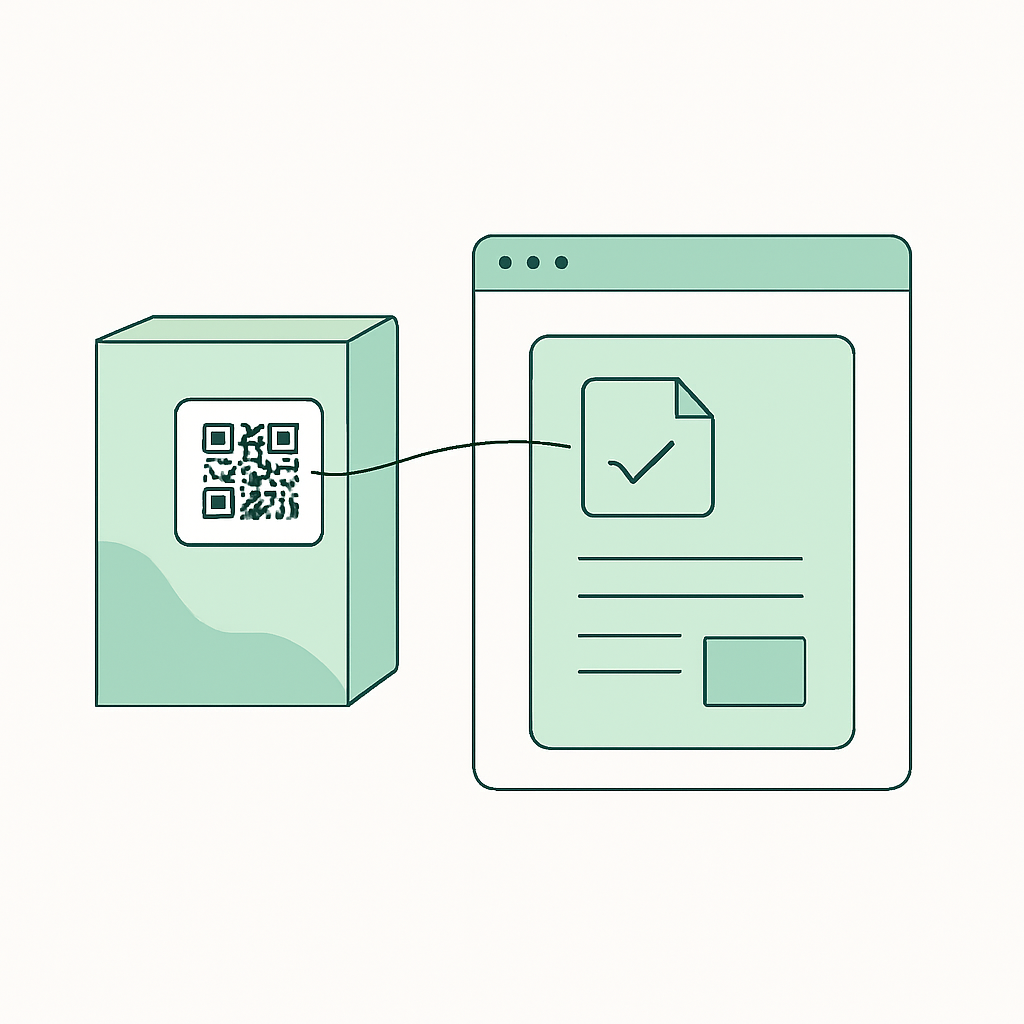
*QR codes can link physical items to a structured Digital Product Passport, enabling controlled access to different types of product data.*
A QR code can point to a digital product page where relevant passport information is displayed. Depending on the product and requirements, different audiences may need different levels of access:
- Consumers may need care, repair, material, or recycling information
- Business partners may need supply chain or technical information
- Repairers may need maintenance or spare-part information
- Recyclers may need material and end-of-life information
- Authorities may need access to regulatory documentation
Businesses should think carefully about which information is public and which information may need restricted access in the future. Current preparation should focus on clean data structure, traceability, and easy updating.
Detailed product data: what “good preparation” looks like
Preparing for Digital Product Passport requirements is not only about collecting more information. It is about collecting information in a way that is detailed, structured, and usable.
A useful product data record should answer questions such as:
- What product does this record describe?
- Which version or batch does it apply to?
- Who made it or placed it on the EU market?
- What materials or components does it contain?
- Which documents support the information?
- Which information can be shown publicly?
- Which information should remain internal or restricted?
- When was the information last updated?
- Who is responsible for maintaining the record?
For many companies, the biggest challenge is not a lack of data. It is that data is spread across different departments and formats:
- Design teams may hold material specifications
- Compliance teams may hold declarations and test reports
- Marketing teams may hold product descriptions and claims
- Suppliers may hold origin or composition data
- Operations teams may hold SKU and batch information
- Customer service teams may hold repair or care guidance
A Digital Product Passport preparation project can help bring these sources together into one structured digital record.
Common mistakes when preparing for Digital Product Passport regulations
Many companies are still at an early stage. The following mistakes can make preparation harder later.
Waiting until the final deadline
Regulatory implementation will happen progressively, but product data preparation can take time. Supplier information, material documentation, and internal product records are often spread across multiple systems.
Starting early can help teams discover missing information before obligations become more urgent.
Treating the passport as only a design asset
A Digital Product Passport is not just a landing page or a label. It is a structured product information resource that should be accurate, maintainable, and connected to real product data.
Creating one generic template for every product
Different product categories may require different information. Businesses should create flexible data structures rather than a single rigid template.
Publishing unsupported sustainability claims
Companies should avoid vague or unverified claims such as “100% sustainable” unless they can support them with appropriate evidence. Digital Product Passports should improve transparency, not create new claim risks.
Ignoring importers and suppliers
A Digital Product Passport often depends on information from multiple parties. Importers and sellers should start aligning with suppliers early.
Forgetting version control
Products change over time. Materials, suppliers, packaging, documentation, and product claims may be updated. A useful DPP process should include version notes or update history so teams know which information applies to which product version.
How Product Passport Base can help businesses prepare
Product Passport Base is a tool for creating, managing, and sharing Digital Product Passports in a simple way. It is designed for businesses that want to start organizing product information without developing a technical solution from zero.
With Product Passport Base, teams can begin creating structured product passport records, prepare product data, and share passport information through digital access points such as product links or QR-based workflows, depending on how they choose to implement them.
Product Passport Base can support practical preparation by helping teams:
- Create a structured digital record for each product
- Centralize product identity, material, and documentation data
- Organize public product information more clearly
- Prepare QR-based access workflows
- Keep product information easier to update
- Reduce reliance on scattered spreadsheets and PDFs
Product Passport Base does not replace legal advice and does not guarantee full regulatory compliance. However, it can help companies take practical steps toward better product data readiness as the EU Digital Product Passport framework develops.
Ready to start organizing your product records?
[Create your first Digital Product Passport](#) with Product Passport Base.
Practical preparation checklist
Use this checklist as a starting point:
- List the products you sell or plan to sell in the EU
- Identify product categories that may be prioritized by EU rules
- Collect product identifiers such as SKU, model, batch, or GTIN
- Map manufacturer, importer, and supplier responsibilities
- Gather material and component information
- Organize repair, care, reuse, and recycling instructions
- Review existing sustainability claims and supporting evidence
- Decide which information can be public and which should remain internal
- Identify which documents may need restricted access
- Create a structured digital record for each product or product family
- Prepare a QR code or digital link strategy
- Create a process for updating passport data when products change
- Monitor EU regulatory updates and sector-specific delegated acts
FAQ
Are Digital Product Passports already mandatory in the EU?
Digital Product Passports are being introduced through EU regulatory frameworks, especially the Ecodesign for Sustainable Products Regulation. The exact obligations, timelines, and data requirements depend on product-specific rules. Businesses should monitor the rules for their sector.
Does every product need a Digital Product Passport?
Not every product has the same requirements. Digital Product Passport obligations are expected to apply progressively to specific product groups. Companies should assess their product categories and prepare accordingly.
What is the difference between a DPP and a normal product page?
A normal product page usually focuses on sales or customer information. A Digital Product Passport is intended to be a structured digital record connected to a product. It may include detailed product data, documentation, material information, circularity guidance, and different access levels for different audiences.
Are textile products affected by Digital Product Passport rules?
Textiles are one of the sectors frequently discussed in EU sustainability and circular economy policy. Textile brands, manufacturers, importers, and EU sellers should begin preparing structured product data, especially around materials, care, durability, and end-of-life information.
What does public product data transparency mean?
Public product data transparency means making relevant product information accessible to people who need it, such as consumers, buyers, repairers, or recyclers. In a Digital Product Passport context, some information may be public while other information may be restricted to business partners, authorities, or internal teams.
Can a Digital Product Passport guarantee EU compliance?
No. A Digital Product Passport can support product information management and transparency, but it does not automatically guarantee legal compliance. Businesses should review applicable requirements and seek professional advice when needed.
What is the best way to start preparing?
Start by organizing your existing product information: product identity, materials, supplier details, documentation, care instructions, and recycling guidance. Then choose a simple way to manage and share that information digitally.
Can Product Passport Base replace a custom technical build?
Product Passport Base is designed to help companies create, manage, and share Digital Product Passports without building a full technical solution from scratch. Whether it replaces a custom system depends on your company’s requirements, product complexity, and internal processes.
Suggested meta title
EU Digital Product Passport Regulations: Current Guide
Suggested meta description
Learn the current EU regulatory direction for Digital Product Passports, what product data may be needed, and how businesses can prepare structured digital records.