Digital product passport resources
The new era of the Textile Industry
The new era of Textile Industry
The textile industry is entering a new phase. For years, brands and manufacturers have focused on design, sourcing, production, logistics, and sales. Now, product information itself is becoming a strategic asset.
Digital Product Passports are part of this shift. For textile brands, small manufacturers, importers, and EU sellers, the question is no longer only “What do we sell?” but also “What reliable product information can we provide, update, and share?”
A digital product passport for textiles can help companies organize key product data in a structured format and make it easier to share information with customers, partners, retailers, or internal teams. It is not a shortcut to legal compliance and it does not replace professional regulatory advice, but it can support companies as they prepare for a more transparent product-data environment.
Why textiles are moving toward more transparent product data
Textiles are complex products. A single garment or textile item may involve multiple materials, suppliers, production steps, dyes, trims, labels, packaging components, and distribution channels.
This complexity creates challenges for businesses that need to answer questions such as:
- What materials are used in this product?
- Where was the product made or assembled?
- Which supplier provided each component?
- What care, repair, or end-of-life information should be shared?
- How can product information be kept consistent across teams and markets?
As expectations around sustainability, traceability, circularity, and product transparency increase, textile companies need better systems for managing product information. Spreadsheets and PDF files may work at a very early stage, but they often become difficult to maintain as product ranges grow.
What is a Digital Product Passport in the textile context?
A Digital Product Passport is a structured digital record connected to a physical product or product model. In the textile sector, it may include information such as:
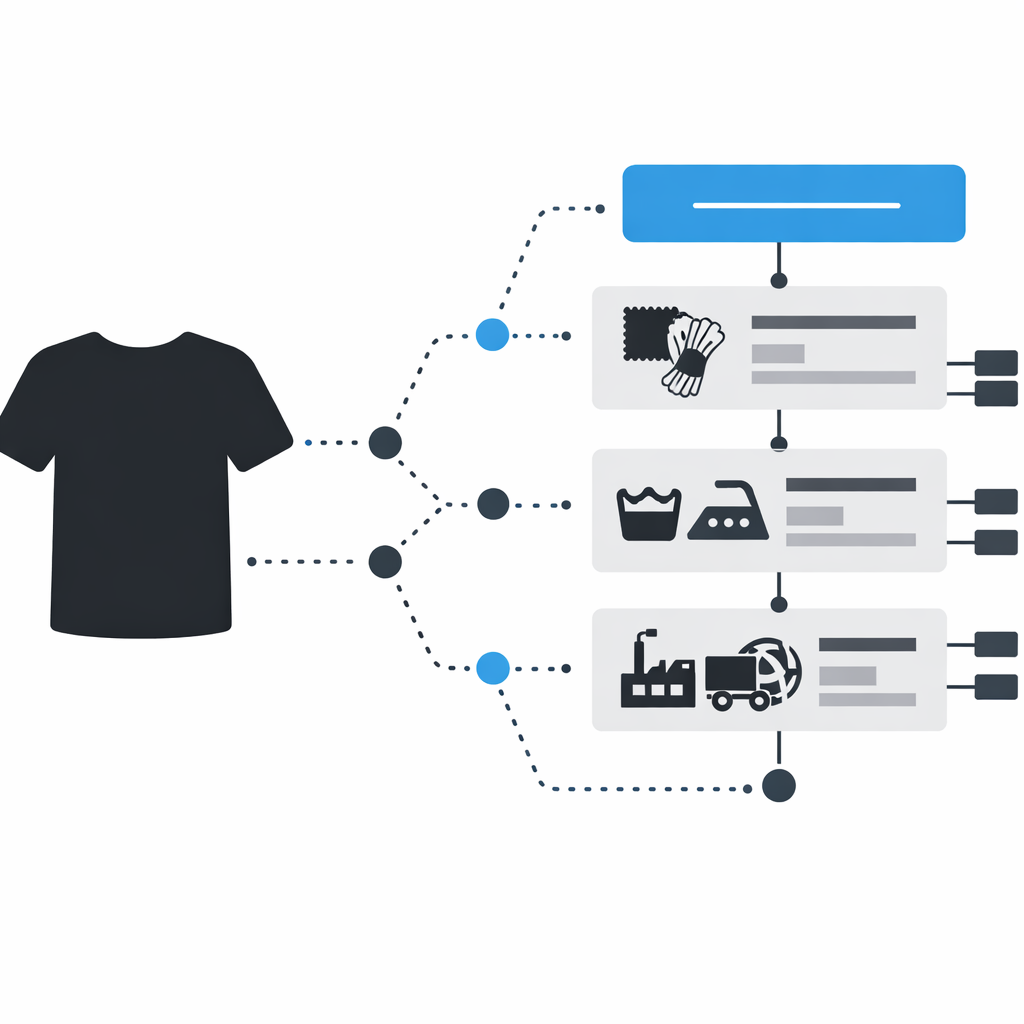
*Visual conceptual de un Digital Product Passport en el contexto textil: un registro digital estructurado conectado a la prenda.*
- Product name and model or SKU
- Brand or manufacturer details
- Material composition
- Country of production or key production locations
- Supplier or batch information, where relevant
- Care instructions
- Repair, reuse, or recycling guidance
- Certifications or supporting documents, if the company has them
- Links to additional product resources
The exact information needed may vary depending on the product, company, market, and applicable requirements. For that reason, businesses should treat Digital Product Passports as part of a broader product-data preparation process, not as a one-time upload.
Why this matters for small textile manufacturers and brands
Large fashion groups often have dedicated compliance, product information, and sustainability teams. Smaller manufacturers and growing textile brands may not have the same internal resources.
That creates a practical problem: companies need to prepare for Digital Product Passports without building a technical solution from scratch.
For smaller teams, the priority is usually to create a simple workflow that allows them to:
- Collect product data in one place
- Create a structured product passport
- Review and update information when needed
- Share the passport with relevant audiences
- Repeat the process across more products over time
A simple tool can reduce friction and help teams start building a more organized product information base before pressure increases.
Key product data textile companies should start organizing
Before creating a Digital Product Passport, textile companies should identify the product information they already have and the data they still need to collect.
A useful starting point includes the following categories.
1. Product identification
This includes basic product information such as:
- Product name
- SKU or reference number
- Collection or season
- Product category
- Images or product documentation
Clear product identification helps avoid confusion between similar items, color variants, sizes, or production batches.
2. Material composition
Textile products often combine different fibers and components. Companies should organize information about:
- Main fabric composition
- Lining composition
- Trims, buttons, zippers, labels, or accessories
- Packaging materials, if relevant
Even when not all details are immediately available, building a structured place to collect them is a practical first step.
3. Supply chain and production information
Depending on the product and business model, this may include:
- Manufacturer or production partner
- Country of manufacturing
- Key processing steps
- Supplier references
- Batch or production order details
Companies should only share information they are comfortable and authorized to publish, especially where supplier confidentiality applies.
4. Care, use, and repair information
Textile passports can become useful for customers when they include practical product guidance, such as:
- Washing instructions
- Drying instructions
- Ironing guidance
- Repair recommendations
- Tips to extend product life
This type of information can support better product use and longer product lifetime.
5. End-of-life and circularity information
Where available, companies may include information about:
- Reuse options
- Take-back programs
- Recycling guidance
- Disassembly considerations
- Material recovery information
This area is evolving, and businesses should be careful to avoid overstating sustainability claims. Information should be accurate, specific, and supported by the company’s available data.
How Digital Product Passports can support textile teams
A Digital Product Passport workflow can support textile companies in several practical ways.
Better internal organization
Instead of storing product data across emails, spreadsheets, folders, and supplier documents, companies can start creating a more consistent product information structure.
Easier sharing
A passport can make it easier to share product information with customers, retailers, distributors, or internal teams. For example, a brand may use a QR code or link to give access to selected product details.
Preparation for future requirements
Digital Product Passports are becoming increasingly relevant in Europe. While requirements can vary and continue to evolve, companies that begin organizing product data earlier may be better prepared to adapt.
This does not mean a tool automatically guarantees full legal compliance. It means the company can start building a stronger product-data foundation.
More consistent product communication
When product information is centralized, teams are less likely to publish conflicting details across websites, marketplaces, catalogs, and sales materials.
A practical first step: start with one textile product
Many companies delay Digital Product Passport preparation because the full project feels too large. A better approach is to start with one product.
Choose a product that is already sold, well documented, and representative of your range. Then create a basic passport structure around it.
A simple first-pass workflow could look like this:
- Select one product or SKU
- Collect existing product data
- Identify missing information
- Create the first Digital Product Passport
- Review the passport internally
- Share it with a limited audience or test group
- Improve the process before scaling to more products
This approach helps the team learn what data is easy to collect, what requires supplier input, and what should be standardized for future products.
How Product Passport Base fits into this process
Product Passport Base is a tool for creating, managing, and sharing Digital Product Passports in a simple way.
For textile brands, small manufacturers, importers, and EU sellers, it can help reduce the need to build a custom technical system from zero. Teams can start preparing structured product records and share product passport information more easily.
Product Passport Base is designed to support product data preparation and passport management. It should be used alongside your own regulatory review, internal quality processes, and professional advice where needed.
Common mistakes textile companies should avoid
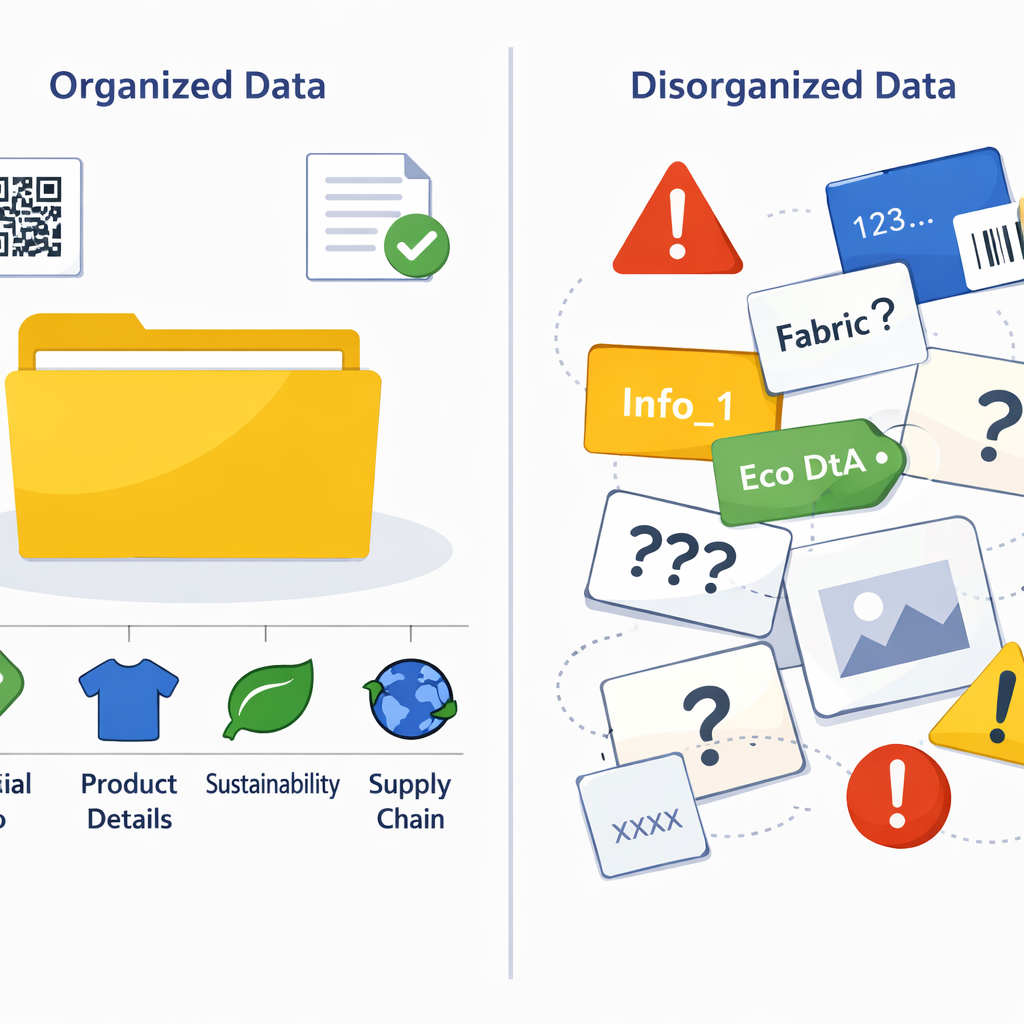
*Ejemplo visual de errores típicos: datos dispersos o inconsistentes y falta de estructura antes de crear el pasaporte.*
Waiting until every data point is perfect
Digital Product Passport preparation can start before all information is complete. The important step is to create a structure, identify gaps, and improve the data over time.
Treating the passport as only a compliance file
A passport can also be a product communication and data management asset. It may support customer education, retailer requests, internal alignment, and circularity initiatives.
Publishing unsupported claims
Textile companies should be especially careful with sustainability, recycled content, durability, and environmental claims. Product passport information should be specific and backed by available evidence.
Building a custom system too early
Some teams consider building their own passport platform before they have validated their data workflow. For many small businesses, starting with a dedicated simple tool is more practical.
Digital Product Passport readiness checklist for textiles
Use this short checklist to assess your current position:
- Do you have a clear product list with SKUs or references?
- Do you know which materials are used in each product?
- Can you identify key production partners or locations?
- Do you have care and use instructions in a structured format?
- Do you have supporting documents stored in an accessible place?
- Do you know which information can be shared publicly and which should remain internal?
- Can your team update product information when it changes?
- Do you have a way to share product passport information through a link or QR code?
If several answers are “no,” that is a sign to begin organizing your product data now.
FAQ
What is a Digital Product Passport for textiles?
A Digital Product Passport for textiles is a digital record that organizes important product information, such as materials, product identification, care guidance, production details, and other relevant data. The exact content can vary depending on the product and business context.
Do textile brands need a Digital Product Passport today?
Digital Product Passports are becoming increasingly important in the EU product landscape. Requirements and timelines can vary depending on product category and regulation. Textile businesses should monitor applicable rules and prepare their product data early, but they should not treat any tool as a substitute for legal advice.
Can small textile manufacturers create Digital Product Passports without custom software development?
Yes. Small manufacturers can use dedicated tools to create, manage, and share Digital Product Passports without building a full technical system from scratch. Product Passport Base is designed to make this process simpler.
What information should be included in a textile product passport?
Common information may include product name, SKU, material composition, care instructions, production information, repair or recycling guidance, and supporting documents where available. Companies should decide what to include based on product type, data quality, and relevant requirements.
Does using Product Passport Base guarantee EU compliance?
No. Product Passport Base can help companies prepare and manage Digital Product Passport information, but it does not guarantee full legal compliance and does not replace legal or regulatory advice.
Soft CTA
If your textile business is preparing for Digital Product Passports, start with one product and build from there.
Use Product Passport Base to create, manage, and share your first Digital Product Passport in a simple workflow.
Create your first Digital Product Passport at https://productpassportbase.com